
3 raisons pour lesquelles les réseaux de vélopartage sont fiables et résilients
24 juillet 2026 — Regard sur l’industrieRegard sur l’industrie
La fiabilité du réseau de transport d’une ville se définit rarement selon son fonctionnement lors d’une journée idéale, mais plutôt par sa performance lorsque se produit l’inattendu.
Que ce soit un projet d’entretien d’infrastructure imprévu et urgent, un afflux de 100 000 usagers lors d’un festival ou des conditions météo imprévisibles, les perturbations mettent à l’épreuve l’écosystème de transport d’une ville bien différemment des opérations quotidiennes. Et pour réussir cette épreuve, il faut un système de vélopartage conçu pour s’adapter.
L’équipe de Lyft Urban Solutions travaille avec des villes, notamment New York, Boston, Chicago, Washington, D.C., Portland et San Francisco, sur trois aspects essentiels pour y parvenir : du matériel conçu pour résister à la pression, des infrastructures capables de s’adapter en cas de besoin et des communications claires avec les usagers pendant les perturbations.
La résilience commence avec un réseau fondé sur l’autosuffisance. De par sa conception, le vélopartage est un mode de transport flexible à grande capacité, conçu pour s’adapter aux conditions réelles. Et comme le vélopartage est en libre-service, un vélo ou une trottinette doit être disponible au moment où les usagers en ont besoin, peu importe les circonstances défavorables ou imprévues, afin que le contrôle se trouve toujours entre les mains de l’usager.
Les villes peuvent renforcer cette autonomie avec des équipements de vélopartage conçus pour fonctionner toute l’année, ce qui permet aux équipes opérationnelles de se concentrer sur le rétablissement rapide du service en cas de perturbation. De nombreux vélos que nous avons fournis à divers réseaux sont en circulation depuis plus de dix ans, et nos tests en laboratoire sont conçus pour correspondre à cette exigence : chambres climatiques, simulations de brouillard salin et bancs d’essai sur mesure soumettent les composants à des cycles plusieurs dizaines de milliers de fois afin de reproduire des années d’utilisation en conditions réelles avant même qu’un vélo ne soit mis en circulation.
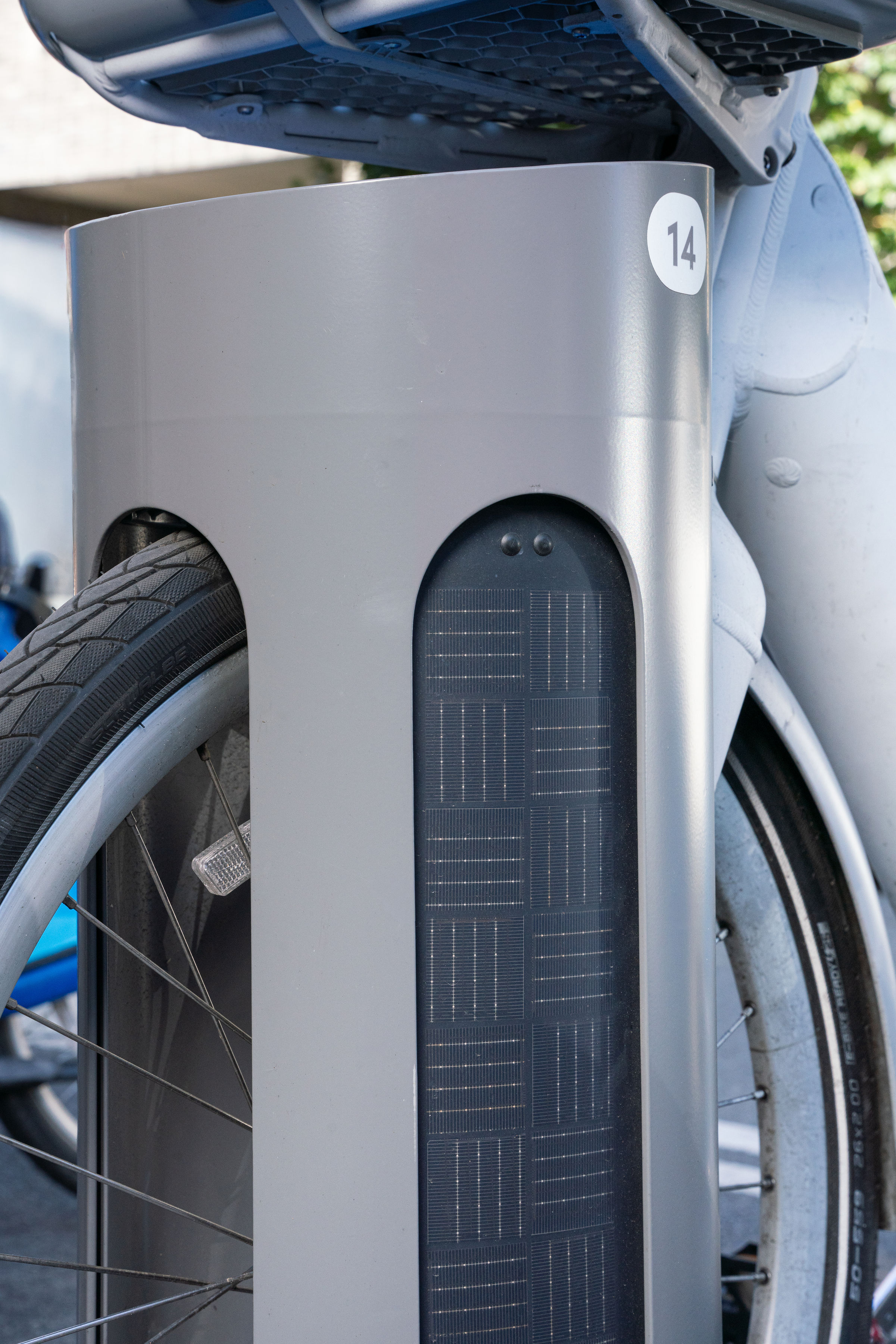
Notre borne Pillar a été créée pour fonctionner toute l’année : les modèles sans recharge fonctionnent à l’énergie solaire avec des batteries qui restent chargées des mois en absence de soleil, alors que les bornes de recharge connectées au réseau électrique peuvent continuer à fonctionner pour démarrer et terminer les trajets même en cas de panne de courant. Notre matériel modulaire adopte la même approche à l’échelle du vélo : les composants individuels peuvent être remplacés sans qu’il soit nécessaire de retirer le vélo du réseau, et les différents modèles de vélo partagent des pièces communes qui sont interchangeables, ce qui permet de prolonger la durée de service des vélos.
Lire la suite : Comment nous testons nos vélos
Bien que des imprévus mettent parfois à l’épreuve le réseau de transport d’une ville, d’autres événements, tels que de grands chantiers, des festivals de musique, des rassemblements politiques ou des événements sportifs, peuvent être anticipés par les exploitants de réseau de vélos en libre-service et leurs partenaires municipaux.
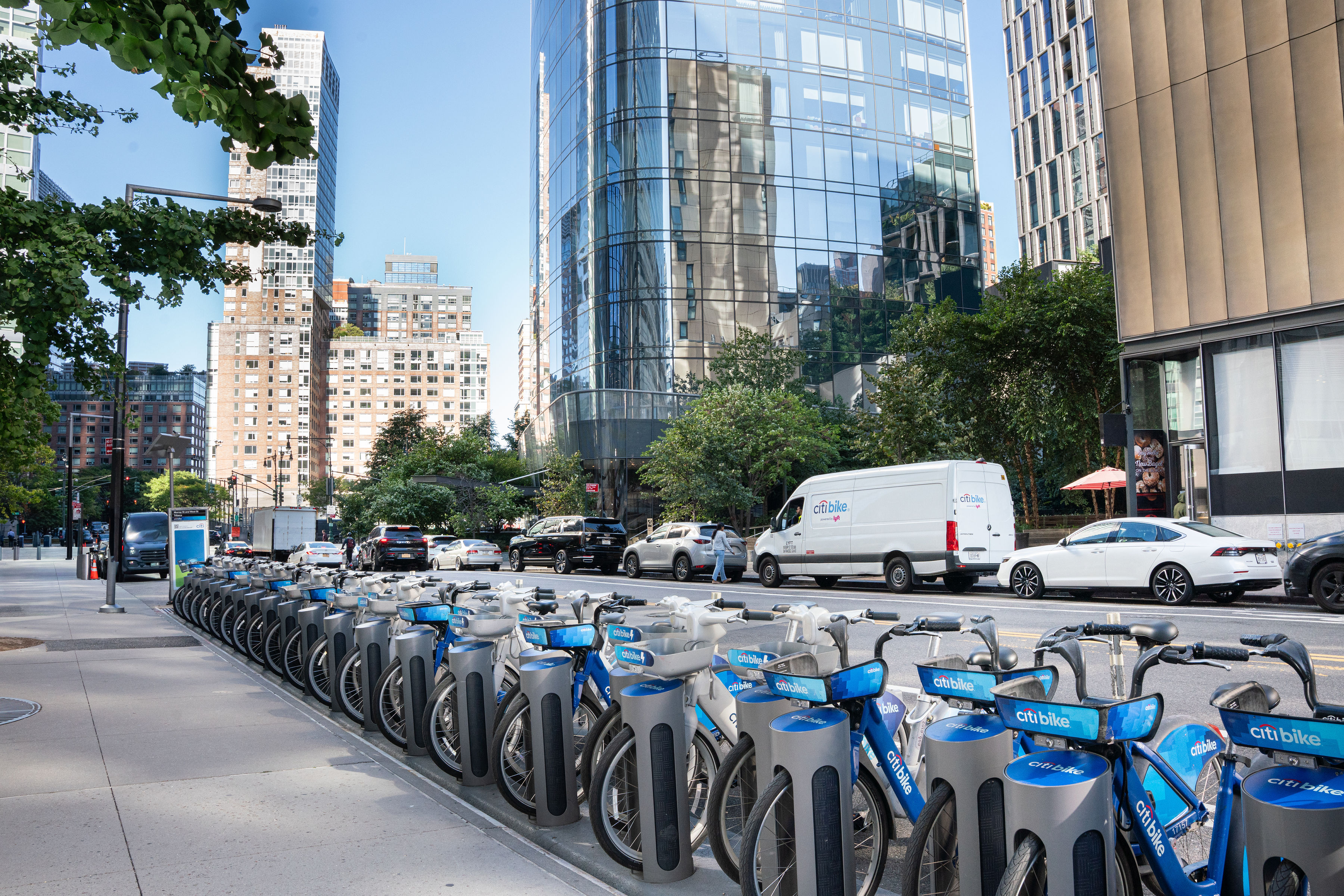
La flexibilité physique d’un réseau de vélopartage constitue un autre atout en matière de résilience. Les stations peuvent être déplacées en quelques heures, ce qui permet aux réseaux de s’ajuster pour les événements ou perturbations prévus, tout en maintenant la couverture de service dans les zones environnantes.
Chaque année, les équipes de Citi Bike gèrent la disponibilité des vélos et des stations lors des fermetures de rue organisées dans le cadre de près de 75 événements. Les événements les plus importants, comme le marathon de New York (qui rassemble plus de 59 000 participants et deux millions de spectateurs dans les rues de la ville), nécessitent le déplacement et la réorganisation de plus de 50 stations, en partenariat avec le service des transports de la ville de New York.
Autre exemple, le pont de Chicago Avenue dans le quartier de River North à Chicago a été fermé pour des travaux de réparation planifiés, qui se sont déroulés de septembre 2025 à la fin de 2026. Les usagers du réseau Divvy ont ainsi presque doublé du jour au lendemain, ce qui a exercé une pression considérable sur l’une des stations les plus importantes et les plus fréquentées du réseau de vélopartage de la ville. En deux semaines, nos équipes ont collaboré avec le service des transports de Chicago et Shift Transit, le sous-traitant chargé des opérations sur le terrain, afin d’installer une grande station supplémentaire près de la première dans le but de répondre à la forte hausse de la demande. Cette réaction rapide a permis aux résidents touchés de profiter d’une option de rechange fiable, pendant la fermeture du pont. À elles deux, ces stations génèrent maintenant plus de trajets que toute autre station du réseau.
À San Francisco, l’équipe du réseau Bay Wheels a installé une station temporaire et ajouté un parc pouvant contenir des centaines de vélos à l’extérieur du site du festival Outside Lands l’an dernier, augmentant ainsi rapidement la capacité du service dans un espace restreint. Cette mise en place a généré plus de 5 500 trajets vers et depuis le festival au cours du week-end, soit une augmentation de 47 % comparativement à l’année précédente. Elle a également contribué à porter le nombre total de trajets dans l’ensemble du réseau à plus de 16 000 lors de la journée la plus occupée, les trajets liés au festival représentant 16 % de tous les trajets du réseau Bay Wheels ce dimanche-là.
À Washington, D.C., lorsque des perturbations ont réduit le service du métro, les autorités locales ont proposé des abonnements à faible coût au service de vélopartage afin d’aider les résidents à répondre à leurs besoins en matière de transport. L’équipe opérationnelle a soutenu cette initiative municipale en s’assurant que le parc de vélos était prêt à accueillir l’afflux de nouveaux usagers.
Lire la suite : Des records de trajets, de vrais partenariats
Le stationnement hybride, qui permet aux usagers de terminer leur trajet à une borne physique ou dans une zone désignée à l’extérieur de celle-ci, confère aux réseaux une flexibilité supplémentaire lorsque la demande augmente considérablement. À Washington, D.C., le réseau Capital Bikeshare a mis en place une exonération des frais de stationnement hors station pour ses abonnés, permettant ainsi aux usagers de garer leur vélo dans un rayon autour d’une station pleine sans frais supplémentaires, ce qui a permis de soulager la pression sur les stations les plus fréquentées tout en garantissant la fluidité des déplacements pour les usagers. Dans des villes comme Chicago et Washington, D.C., les options de stationnement hors station peuvent en fait doubler la capacité du réseau en un seul après-midi.
Nos équipes et partenaires conçoivent des réseaux hautement adaptables, que ce soit au niveau de la tarification, de l’exploitation ou de la disponibilité.
Lire la suite : Des systèmes de vélopartage qui traversent les frontières des municipalités
La préparation opérationnelle et la communication avec les usagers sont inséparables : tenir les usagers informés avant, pendant et après une perturbation est tout aussi important que l’intervention sur le terrain. Des messages communiqués de manière proactive sur la disponibilité des stations et les niveaux de service permettent aux usagers de continuer à se déplacer, tandis que les données recueillies pendant la perturbation aident les partenaires municipaux à comprendre comment les habitudes de déplacement ont évolué et à se préparer pour les trajets du lendemain.
À Boston, la fermeture de la ligne orange de la Massachusetts Bay Transportation Authority a été communiquée aux usagers bien à l’avance. Des équipes ont déplacé et agrandi des stations de vélopartage le long de la ligne, mis en place un réseau de services de préposés au stationnement des vélos près des principaux arrêts de transport en commun et offert un abonnement mensuel gratuit aux usagers concernés. Ainsi, malgré les travaux en cours et la fermeture de nombreuses rues à la circulation générale, notre équipe a assuré le bon fonctionnement du réseau et communiqué clairement les informations sur sa disponibilité tout au long de cette période.
Lors des tempêtes hivernales Fern et Hernando à New York, le réseau a été temporairement interrompu, mais Citi Bike a communiqué de manière proactive avec les usagers et a fourni des mises à jour régulières au public pendant la remise en service. Des équipes travaillant 24 heures sur 24 ont affronté des conditions météo exceptionnelles pour dégager les vélos pris dans la glace dans des milliers de stations, tout en veillant à assurer le remplacement des batteries et l’entretien des vélos, afin qu’ils soient prêts à être utilisés dès que les stations seraient dégagées.
Qu’il s’agisse de perturbations planifiées ou imprévues, une communication claire et rapide avec les usagers est tout aussi importante que le travail sur le terrain.
Lire la suite : Quand les transports s’arrêtent, le vélopartage continue de faire bouger les villes
Les perturbations génèrent aussi des données qui éclairent les décisions après coup. Les habitudes des usagers et les tendances en matière d’afflux lors d’une fermeture des transports en commun peuvent indiquer où des infrastructures sont nécessaires. À Boston, par exemple, les données des périodes de perturbation ont permis de formuler des recommandations sur le rééquilibrage, l’agrandissement de certaines stations et le déploiement de stations supplémentaires. Au fil du temps, ces informations contribuent à façonner la croissance du réseau.
La mise en place d’un réseau de vélopartage résilient dans le cadre d’un réseau de mobilité urbaine plus large ne dépend pas d’un seul élément. Elle repose sur du matériel conçu pour fonctionner en toute saison et durer des années dans les rues de la ville, sur des équipes opérationnelles qui peuvent déplacer des stations en quelques heures ou déblayer plus de 600 stations après une tempête d’une ampleur record, de même que sur des partenariats avec les villes qui transforment les leçons tirées de chaque perturbation en un réseau plus solide et mieux connecté. Ayant fait ses preuves au fil des ans, cette combinaison est ce qui fait d’un réseau de vélopartage une infrastructure urbaine essentielle.
Découvrez les vélos, la technologie et les opérations de Lyft Urban Solutions


